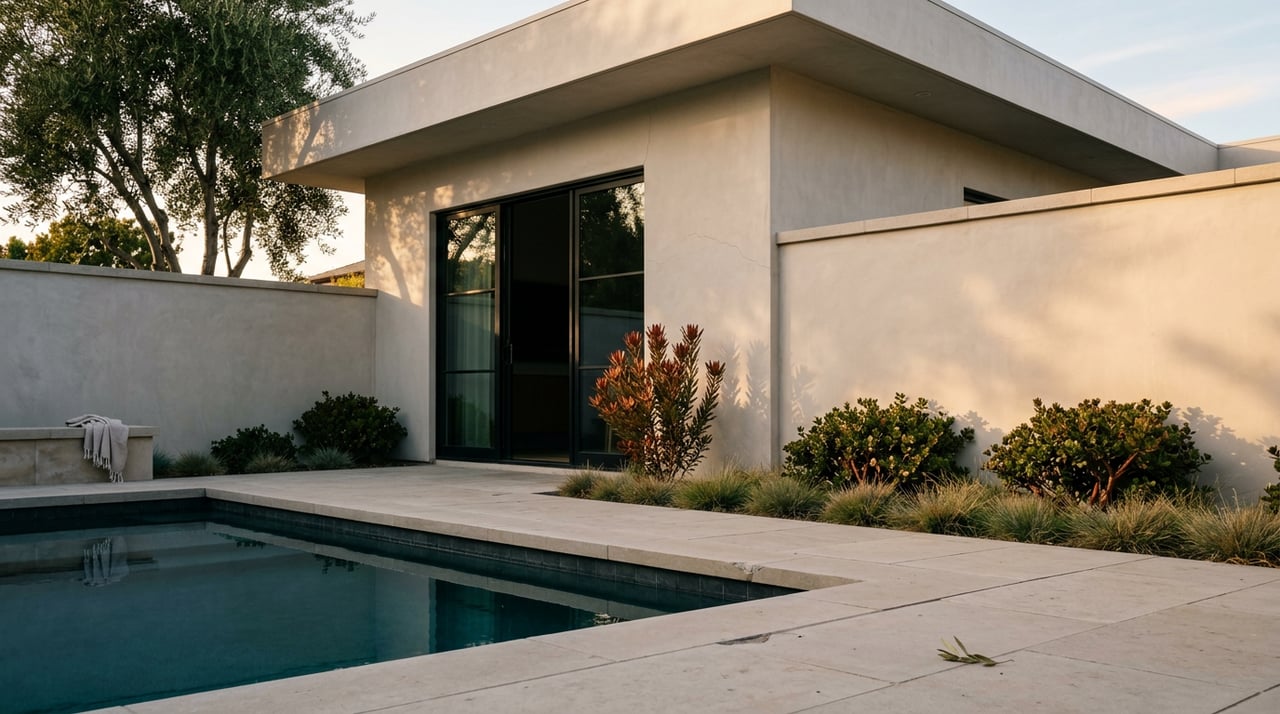
A buyer touring a Shell Beach cottage last spring was handed a printout before she'd even seen the primary bedroom. Twelve months of Airbnb bookings, occupancy rates, gross revenue north of $70,000. The listing agent called it a turnkey investment. Those figures describe past rental activity; they stay with the seller when the house changes hands.
That difference between rental history and what a deed actually conveys is the thing worth understanding before you fall in love with a Pismo Beach or Shell Beach property that's currently working as a short-term rental.
The rule that resets the moment escrow closes
In November 2023, the Pismo Beach City Council adopted Ordinance O-2023-006, which stopped the city from issuing any new residential short-term rental licenses. The freeze followed years of neighborhood complaints and a task force that included residents on both sides of the issue, hotel representatives, and two council members, all working through what city staff described as loopholes that had opened up since the original 2018 rules.
That part is straightforward enough. What matters more for a buyer is what the ordinance says happens to a license that already exists. The Pismo Beach City Council staff report spells it out directly:
"Short-term rental and homestay licenses shall be personal property of the property owner and shall not run with the land."
That single clause is the whole story. A license is not a fixture like a built-in range or a water heater. It is not real property. It belongs to the person who holds it, and when that person sells, the city treats the license as terminated. The Pismo Beach short-term rental permit page confirms the same thing in plain language for buyers asking the obvious question: permits do not transfer with the sale of a property, and a new owner in a downtown Vacation Rental zone would have to apply for their own permit from scratch. In a zone where short-term rentals are the only allowed category, that application has nowhere to go, because the city isn't accepting new ones.
Why the freeze matters more than it sounds like it should
Before the freeze, the city licensed a modest number of properties as short-term rentals or homestays. Since then, that number can only shrink. Every time a licensed owner sells, the total supply of licensed STR and homestay properties in Pismo Beach goes down by one and stays down. There is no path back in for a typical single-family home outside the zones where Vacation Rentals are already permitted.
That leaves three distinct categories, and they are not interchangeable:
| License type | Where it's allowed | Owner occupancy required | Transfers with sale |
|---|---|---|---|
| Short-Term Rental (STR) | Pismo Beach's STR rules list R-1, RSL, PR, OS, OS-1, and RSM zones | No | |
| Homestay | Same residential zones | No | |
| Vacation Rental | Pismo Beach's Vacation Rental rules list C-1, RR, and R-4 zones (largely the downtown core) | No | No, but new applications remain open in these zones |
The practical difference for a buyer: if a home you're considering sits in an R-1 or similar residential zone and currently holds an STR license, that income disappears at closing because the prior owner's license does not transfer. If the same home sits in one of the downtown Vacation Rental zones, you can apply for a new permit as a buyer, since that category was never frozen. Location within the city, not just proximity to the sand, decides which door is open to you.
What guests pay and what unlicensed operators risk
Licensed Pismo Beach rentals are subject to lodging taxes. That's a meaningful piece of city revenue. The City of Pismo Beach FAQ lists administrative fines for unlicensed operation starting at $1,500 for a first violation, $3,000 for a second within a year, and $5,000 for each one after that.
Shell Beach's view premium versus the rest of the map
Pismo Beach isn't priced uniformly, and understanding why helps explain what you're actually paying for when a listing leans on its income story. Standard homes across the city have typically sold in the $1 million to $2 million range, with prime locations and high-end properties reaching $3 million to $4 million and beyond. Shell Beach, the bluff-lined neighborhood on the northern end of the city, consistently commands a premium over less scenic inland parcels, largely on the strength of ocean views and a quieter, more residential feel than the touristy pier area downtown. Condos and smaller homes, meanwhile, have generally traded in the $700,000 to $900,000 range, which is where a lot of the more affordable entry points into the market actually sit.
That spread matters because the same STR-licensing freeze applies regardless of which price tier you're shopping in. A $750,000 condo with a grandfathered license and a $3.5 million Shell Beach view home with one are both sitting on an asset that cannot follow the sale. The view premium is real and it's yours to keep. The rental-income premium is not.
What the headline median actually hides right now
If you've been comparing Pismo Beach numbers across different sites, you've probably noticed they don't agree, and that disagreement is itself informative. In the 30 days ending August 6, 2026, the median closed sale price across the city was $1,275,000, or $721 per square foot, with homes closing at 94.6 percent of list price on average and the market sitting at 3.2 months of inventory, which points to a roughly balanced condition between buyers and sellers. Over the three months ending in May 2026, a different trailing window showed a median sale price of $1.4 million, up 4.1 percent year over year, even as price per square foot had fallen 7.4 percent over the same period, a combination that usually means larger or higher-end homes are making up a bigger share of what's selling while the broader per-square-foot value is softening. By June 2026, a narrower monthly snapshot showed the median sale price slipping to $1,355,000, down 5 percent from May, with average days on market stretching to 116 from 68 the month before.
No single number here is wrong. They're measuring different windows with different methodologies, and none of them is measuring the thing a rental-income buyer actually needs to know, which is whether the license attached to a specific address will still be attached to it after closing. The lesson carries over directly: a listing price, like a market median, only tells you part of the transaction. The rest lives in paperwork the portals don't show you.
What to ask before you write an offer
If a Pismo Beach or Shell Beach listing is being marketed with rental income figures, the questions worth asking before you get emotionally or financially committed are specific ones. Is the property currently operating under an STR license, a homestay license, or a Vacation Rental permit, and which zone is it in. Does the seller hold that license personally, and has the listing agent confirmed with the city that it terminates at sale rather than transferring. If you intend to live there part of the year and rent it the rest, do you qualify as a homestay operator under the primary-residence documentation the city requires, including proof tied to your tax filings. None of this shows up on a comparative market analysis, and none of it should stop you from buying a beach house you love. It should stop you from paying for income you can't legally keep.
Ready to look at this with fresh eyes
If you're weighing a Pismo Beach or Shell Beach purchase and want a straight read on what a listing's numbers actually mean once the paperwork clears, Sara Corliss can walk through the specific zoning, licensing, and pricing picture for any address you're considering. Schedule a Free Consultation and get answers before you write an offer, not after.
Does every short-term rental in Pismo Beach lose its license when the property sells? Any STR or homestay license tied to a residential zone terminates at sale because it's defined as personal property of the owner, not something attached to the real estate. A Vacation Rental permit in one of the downtown commercial or R-4 zones works differently, since new applications in those zones remain open to a buyer, but the specific permit the seller held still does not transfer automatically.
Can I apply for a brand new STR license if I buy a home in a residential zone? Not under the current ordinance. The city stopped accepting new short-term rental license applications in November 2023, and that freeze applies citywide in the residential zones where STRs and homestays are allowed.
This article is general information, not legal, tax or financial advice. Consult a qualified professional about your situation.